

Explore Our Services
Our work spans national, state, county, city, and local levels, but at its core, it is about relationships. We are grateful for the people and organizations with whom we have partnered who are also striving to fathom a resilient future.
What We Offer
We offer a number of services, alone or in combination, to help you with your project. Contact us to discuss your needs in more detail to see if we are good fit for you and your project.
-
Thalassa Research Institute strives to provide the best available marine and climate science to public and private entities for use in developing policies and making decisions.
For many people, wading through the science of climate change seems a daunting endeavor. There are thousands of articles in both peer-reviewed scientific journals and lay literature. Hundreds of websites provide climate change information at varying levels of complexity and credibility.
With experience in research, policy, and science communication, Thalassa can help provide the best available science for your project or decision-making in a relevant, accessible way.
-
Thalassa Research Institute specializes in a wide range of science writing and editing, from peer-reviewed publications and technical reports to more creative forms such as essays and children’s books. See Publications for examples.
Examples of Our Recent Work
We have and can complete work isolated in one of the categories listed above—research, consulting, editing, writing—but the true strength of Thalassa is when we combine our skills for multidisciplinary projects, providing cutting-edge science, community-centered outreach, legal context, and clear, creative communication products accessible to all.
National Climate Assessments
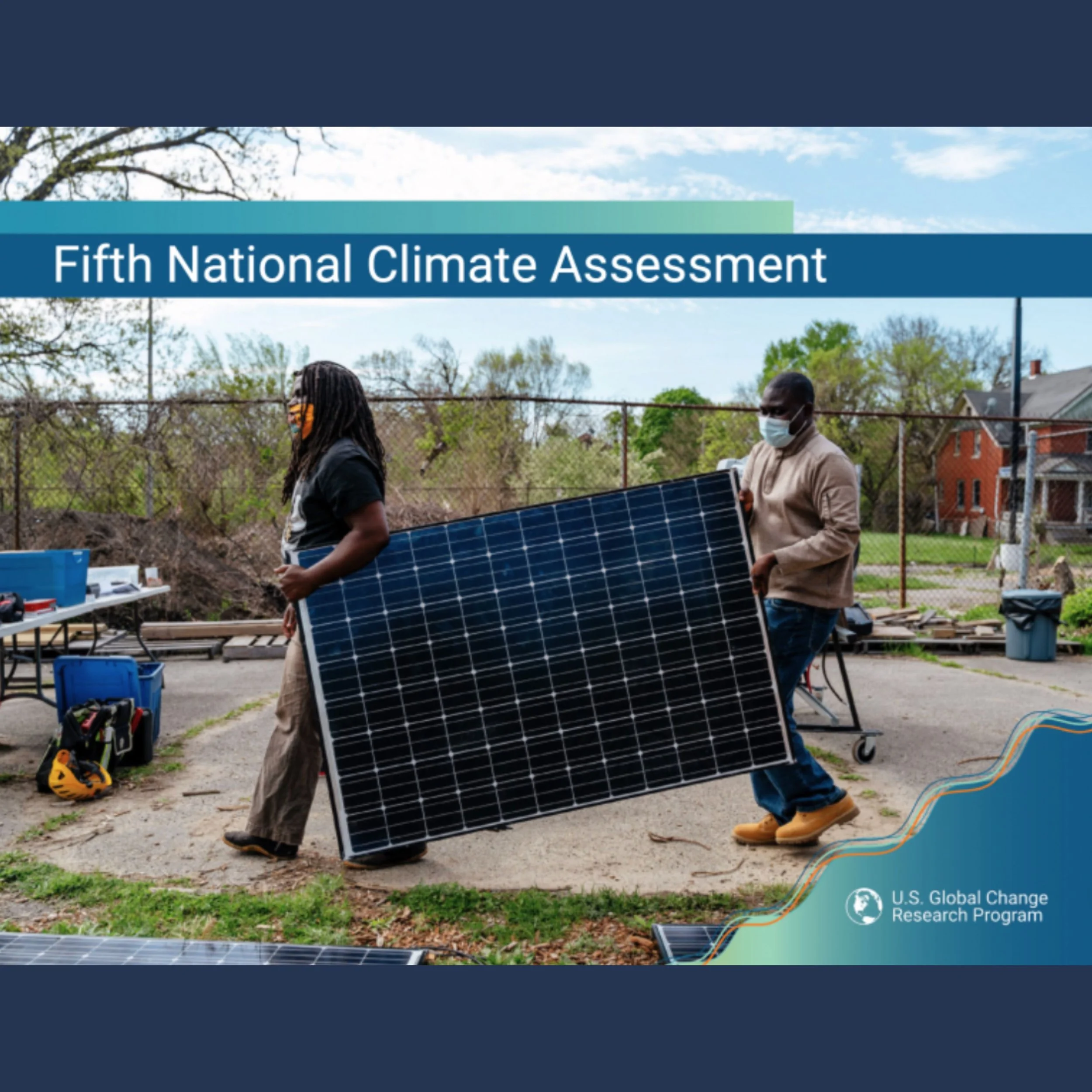
Thalassa co-authored the Coastal Effects chapter of the Fourth (2018) and Fifth (2023) National Climate Assessments.
California Climate Change Assessments
Thalassa worked on the coastal sections and overall editing of the Los Angeles Regional Chapter of California’s Fourth (2018) and Fifth (2026) Climate Change Assessments. The Assessments directly inform State policies, plans, programs, and guidance to promote effective and integrated action to safeguard California from climate change.
Scripps Rady Ocean Plastic Pollution Challenge
From 2019-2021, Thalassa co-facilitated a partnership program between the Center for Marine Biodiversity and Conservation, Scripps Institution of Oceanography, and the Center for Social Innovation and Impact at the Rady School of Management, UC San Diego. The goal of the program was to find innovative solutions to reduce plastic pollution in California's marine protected areas. The inaugural multi-stage program provided skills for solving complex problems, space for participants to develop a systems perspective on the plastic pollution problem, and interdisciplinary teams to develop new strategies. Juliette was involved in early program co-planning, and Charlotte co-facilitated the student challenge, published several articles in ECO Magazine, and helped develop a short educational video.
City of Mill Valley OPC Grant
Thalassa worked with the City of Mill Valley, CA, to draft a grant proposal for California Ocean Protection Council (OPC) funding. The proposal was approved unanimously by the OPC, securing $965,000 of funding for the City of Mill Valley, with an additional $200,000 from local funds. The project is designed to engage regional partners and develop three engineering adaptation projects aimed at reducing flood risks. Thalassa helped the city build its internal capacity to bring this effort into the city’s Planning and Public Works Departments, ensuring that the project gets embedded in the city’s overall processes. Thalassa now guides the process as a member of the community working group.
New Standard of Practice for Sustainable Infrastructure
Thalassa helped develop a first-of-its-kind standard for the American Association of Civil Engineers (ASCE), ASCE/COS 73-23: Standard Practice for Sustainable Infrastructure, which provides guidance for infrastructure owners on developing and implementing sustainable solutions throughout a project’s entire life cycle. The standard is a non-mandatory, performance-based consensus standard designed for civil infrastructure ranging from transportation projects to water systems and the energy grid.
California Climate Adaptation Needs Assessment
Communities in California recognize the pressing need to consider the impacts of climate change in future planning and governance decisions. There is also a considerable need for training and coordinated, location-specific information for climate change impacts. To more precisely identify community needs, Juliette served as co-Principal Investigator, in partnership with USC Sea Grant and Dr. Susanne Moser, and led the development and publication of a statewide information, research, and tools needs-assessment survey directed to coastal decision-makers in coastal counties. Juliette led the survey in 2011 while working for USC Sea Grant and led the 2016 and 2023 surveys with Thalassa. Charlotte contributed writing, editing, and layout for the 2023 survey while at USC Sea Grant.
Paying it Forward: The Path Toward Climate-Safe Infrastructure in California (AB 2800)
In 2018, Juliette co-led the development of “A Report of the Climate-Safe Infrastructure Working Group to the California State Legislature and the Strategic Growth Council.” Challenging the idea that climate scientists and engineers view the world through different lenses, the Climate-Safe Infrastructure Working Group brought together California state engineers and architects, along with leading California climate scientists, to work together to identify a climate-safe path forward for California’s infrastructure. The AB 2800 report laid the foundation for a number of state executive orders under both Governor Brown and Governor Newsom, and played a large role in reshaping how the state developed its subsequent adaptation strategies.
Wood River Land Trust
In 2021-2022, Charlotte wrote two articles on regional issues of water rights, development, land-use policies, and a possible path to future sustainability for the Wood River Land Trust in Hailey, Idaho.